Showing posts with label Article. Show all posts

Sunday, January 30, 2011

Cheese— It's what's for dinner.

Antonelli's
So this afternoon I was looking forward to dinner. I had planned it all out, I was going to have grilled chicken breast and salad with a fresh vinaigrette dressing. I took some of the chicken and put it in a tea brine* to which I added a couple of bay leaves and a sprig of fresh rosemary. I then took the rest of the chicken and made a quick marinade with vinegar and an Indian spice mix I had put together. Then four o'clock rolled around and I was no longer in the mood for chicken (no worries I'll save it for Sunday), suddenly I wanted cheese and crackers. So, I did the only rational thing in this situation: I drove 15 miles to Central Market for crackers, and settled instead on quinoa tortilla chips, got a Texas Tea Peach to drink, and chocolate covered ginger for dessert. Then I did the unthinkable- I skipped over C.M.'s cheese section entirely and headed over to Antonelli's Cheese Shop. Why skip C.M. huge selection in favor of Antonelli's? For a couple of reasons: first, Antonelli's is a local Austin business and I like to keep it local. Second, because Antonelli's is a small privately run shop that works with small private producers in their respective regions they do tend to have some cheeses that C.M. doesn't carry.


Majorero and Wine
I get into the shop and I'm thinking, What do I want? What will go with the chocolate and tea? Not being an expert on cheeses I was totally lost. Fortunately for me, the staff at Antonelli's knows their stuff. It took the girl behind the counter all of about thirty seconds to make a recommendation based on what I had purchased at C.M. Her selection for me: Majorero (pronounced ma-ho-rero), a type of Spanish goat cheese.


Cheese Selection
So how was it? Delicious, that's how it was. It was nutty and creamy with that olfactory filling bite that you get out of good sheep or goat's milk cheese. It went perfectly with chips (no surprise considering they were flavor-neutral), complimented the tea, and added some nice overtones to the chocolate. The 'dip' in the middle there is a spicy tomato sauce I made. I sauteed a little onion and garlic, added the tomatoes and some rosemary, pepper, salt, bay leaf and a little chili powder for some kick. I thought it went nicely with everything. I also happened to have a little white wine sitting around, a Pinot Grigio by Bota Box. I'm not sure it was the right wine for this cheese, but as I said I'm no cheese expert. And yes, Bota Box wine comes in a box, but it is fantastic wine. I served some at a dinner party a while ago and my wine-snob friends (that's a compliment by the way) gave me an offended look and scoffed until they tried it. They were won over to the ways of boxed wine.To Antonelli's Cheese Shop, thanks for the suggestion, it was exactly what I wanted. I will certainly be visiting again.


*Brining helps lean meats like chicken breast to retain moisture, so I generally try to put my lean meats in a brine for at least a couple of hours before cooking. I usually use about 32oz of liquid to one table spoon of salt. In this case the tea was an English Breakfast, but I usually prefer a Lapsang Souchong which is a type of Chinese smoked tea. I'm not sure yet how this brine turned out. I'll let y'all know tomorrow if it turned out well!  

Wednesday, January 26, 2011

Austin Area Specialty Stores

If you're like me you may have often found yourself wondering, "Where can I get the things I need to make that kind of food," or, "Where can I go to get great organic products?" With that in mind, we have put together a list of some great places in the Austin area where you can go to get what you need.

Store:
Apna Bazaar
Type of store:
Apna Bazaar
International- primarily Indian and Pakistani goods. They have an excellent array of whole spices and premixed masalas. You will also get very friendly, personalized service which is generally lacking in most supermarkets. In addition to a very large selection of products, they used to serve the best samosas and chaat in Austin. Why mention something they no longer carry? Because I had a chance to speak with the owners, and they mentioned that they stopped serving fresh made food because they plan to open a restaurant in the same shopping center in February. They said it will be focused on Indian seafood and food from the region of Goa, which is something not often seen in Austin. They can count on a review as soon as they open!
Location:
8650 Spicewood Springs Rd
Austin, TX 78759


Store name:
KP Indian Grocery
Type of store:
KP Indian
International- primarily Indian and Pakistani. Like Apna Bazaar, they have an excellent selection of whole spices and masalas. In addition they also have a great selection of produce, and utensils needed for some types of Indian food. They also have the type of the great customer service you'd expect from a family run store.
Location:
1212 West Parmer Lane, unit # F
Austin, TX 78753


Store name:
Central Market
Type of store:
Central Market
Specialty, organic and international products. Central Market is a bit of a land mark in Austin. It is a very large supermarket owned by the HEB chain of grocery stores. They are known for their very extensive produce section which includes a large number of organic and gourmet items. They have a very large meat and seafood section. They also have an excellent selection of wine and beer, a fantastic cafe and bakery, and one of the best selections of cheeses in Austin. Seriously, I could spend entire monthly grocery budget on their cheese and still not sample everything they have. Maybe I should do that....On most Thursday evenings they also have live music on the patio, and offer various culinary classes throughout the week. In addition they also do what they can to represent state and local producers and farmers. They are one of only two places in town to offer Sticky Toffee Pudding Co products. Sticky Toffee is owned by Tracy Claros, a native of England, who has brought her culinary expertise in baking to the Austin area. It's too hard to explain the flavor, but suffice it to say it was like a culinary awakening for me. I didn't think that pre-packaged baked goods could be that delicious. I highly recommend the orange ginger pudding. 

Location:
There are two locations in town, so check online for the location nearest you.


Store name:
Wheatsville Co-op
Type of store:
Wheatsville Co-op
Organic, Local, and health food. Wheatsville is a medium sized supermarket that carries just about everything you'd expect. The produce is fresh, much of it organic, and they also offer a wide selection of items sourced from local and Texas producers. They also have a nice selection of bulk items such as tea, spices, nuts and treats.

Location:
3101 Guadalupe Street
Austin, TX 78705


Store name:
Sun Harvest
Sun Harvest 
Type of store:
It is a small to medium sized organic and health food. They also have a very extensive bulk section that includes nuts, cereals, grains and more.

Location: 
Two locations in town, so check online for the location nearest you.


Store name:
Fiesta Mart

Type of store:
Fiesta mart
Fiesta is a large supermarket located right off IH 35. They have a very nice international section, although they do specialize in Mexican products. You can get fresh made tortillas at Fiesta, and if you are feeling adventurous they even sell huitlacoche (pronounced weet-la-coachay), a type of fungus that grows on corn. It's sometimes referred to as Mexican Truffles. It goes quite nicely in quesadillas.  
Location:
There are two locations in town, so check online for the location nearest you.


Store name:
Antonelli's Cheese Shop

Type of store:
Antonelli's Cheese Shop
Cheese. If I could afford to, I'd happily spend a month's salary at this store. They offer a wide selection of cheeses, salamis and even some wine. Of course the real star here is their cheese. Their selection of cheeses is excellent. They source from small producers all over the world, and their inventory varies in size and selection based on what they've been able to procure. Antonelli's also offers classes in tasting and pairing. In addition, you get kind of personalized and expert service that can only happen at a small, privately owned shop.

Location:
4220 Duval Street
Austin, TX 78751


Store name:
Water 2 Wine
Type of store:
A fully functioning wine-making store. In addition to selling wine bottled in house (I sampled a Merlot, very nice), they also offer you the opportunity to be your very own vintner. Seem strange? This is how it works- you come in and tell them you want to make some wine. They then help you select the type of wine to make and the grapes that will best suit your needs. Then they help you through the rest of the process of pressing the grapes, fermenting the wine (45 days), bottling and then printing your own custom labels. They also offer classes on wine tasting and food pairings. The entire staff is very friendly, and extremely knowledgeable about their craft. If you like great wine, or if you are interested in trying your hand at wine making then this is a great place to visit. 
Location:
There are two locations in town, so check online to find the location nearest you.


Store name: 
MT Supermarket 
Type of store:
MT Supermarket is a very large Asian supermarket located in an excellent Asian shopping center. They sell a very large array of products spanning several Asian cultures. They also sell some rather unique produce, the kind of things not usually found in an American supermarket. Things like durian fruit. Durian fruit is a large and rather dangerous looking fruit known for its rather, ummm, unique odor. I've never smelled it but I am curious..... 

Location:
10901 North Lamar Blvd # G
Austin, TX 78753


Store name:
Lee's Meats
Type of store:
Lee's Meat Market
Butcher shop. Lee's is one of several actual butcher shops in town. They offer a very nice selection of meats and even prepared dishes and sides. They will also custom marinate, cut, and cook your meat for you.
Location:
1601 West 38th Street
Austin, TX 78731


Store Name:
Whip In
Type of store:
Whip In
Beverage and cafe. The Whip In is known around town for its huge selection of beer. They offer all kinds of beers from all over the world. The number that I've heard most often is 400. I'm not sure if it's quite that large, but it is rather extensive. In addition to beer and other beverages they also have a fully functioning kitchen and serve up some homemade Indian and Texas cuisine. I spoke with one of the employees and he told me that the owner's wife comes in and cooks many of the items herself. They are on our list of reviews. If you fancy a drink stronger than beer, they have you covered on that as well. Attached to the Whip In is their sister store: Beverage World. Beverage World has a very nice selection of hard liquor and wines.
Location:
950 South I H 35
Austin, TX 78704


Store name:
Austin Homebrew Supply
Type of store:
Austin Homebrew caters primarily to home brew enthusiast. They offer everything you'll need to get started making your very own beers and ciders. They have a wide selection of grains, yeast, bottles, kegs and just about everything else you will need. They also have supplies for wine making, soda making and cheese making. Believe me just walking into the place gave me several more ideas for stories, maybe a start to finish guide for making your own home brew? Or maybe cheese making? You'll just have to wait and see!
Location:
9129 Metric Blvd
Austin, TX 78758

This is list is by no means meant to be an exhaustive list of specialty stores in Austin these just some of our favorites. The fact is that there are a large number of other places that we just didn't have the time mention. The next time you're feeling adventurous or inspired to try something new go to your favorite specialty store or just pull up this list and give it a go!

-Matt

Sunday, January 2, 2011

What Brew Is Right For You?

"Beer is proof that God loves us and wants us to be happy."

The above words were spoken by the famous American statesman and founding father, Benjamin Franklin. Aside from being the face on the U.S. one hundred dollar bill, Ben was one of the great thinkers of his day. His is probably most famous for his research into electricity, but he was also a noted writer and diplomat, without his efforts in Paris the French may never have entered the revolution.  I would say that makes his above statement true, who am I to argue with such an experienced and knowledgeable man?

I love beer, its a big part of the reason I have a bit of a belly. I love to brew, because what better to do than spend time with friends while making, talking about and drinking beer? Beer can be daunting to the uninitiated, and understandably so. When you walk into a real, well stocked, beer aisle how do you know what to choose? What is the difference between a pilsner, a hefeweizen, a porter, a stout and a pale ale? Is there any difference? In this article I will seek to clear up some of the mysteries of the wonderful world of beer.

Malted Grains
First and foremost, to get things straight, let's discuss the main types of beer. In the same manner as wine, beer can be broken into large categories which contain many and varied sub-categories. The two categories of beer, the umbrellas under which all varietals fall, are ale and lager. The main difference in the two is the yeast used to ferment them. Ale yeasts live and feed at temperatures between 60 and 75 Fahrenheit, whereas lagering  yeasts prefer cooler temperatures, around 48 to 58 Fahrenheit. Another difference is the flavor created by the malted grains that are used to make the beers. Ales, as a rule of thumb, have a thicker mouth feel, more like drinking bread. You can usually taste the malted grain used in ales. Lagers, on the other hand, tend to be much lighter in body and crisp in flavor, I'm not being snarky when I say that lagers tend to have a body closer to water than ales do.

Now, why don't we discuss a few varietals of each, so that you'll have an idea what you're looking at next time you go to your local purveyor of brewed goods. Personally I like almost all varieties of ale, it's just my preference, but I'll focus on two: Pale Ale and Porter. As far as lagers go we'll cover pilsner, my personal favorite lager.

Pale Ale


Hops
Pale ales are renowned for being light colored and slightly lighter bodied than most other ales. Another distinguishing feature of pale ale is that it should have a very hop forward taste. Hops, if you are unaware, are a flower cluster that act as a preservative, a perfuming, and a flavoring agent in the beer. The hop is typically that bitter, but in a good way bitter, flavor that you taste in your beer, the nice counter balance to all that malty heavy sweetness from the grains. In a good pale ale the hop is the first thing you taste and smell, personally I am fond of the Citra variety, which has sort of a grapefruit flavor. My favorite aroma hop is Amarillo; I don't know how to describe its aroma other than just beautiful. You may occasionally see an India Pale Ale, this is a type of pale ale with extra hops added to the beer, creating a much more apparent and "punchy" hop flavor. India Pale Ale originated in England, not Bombay as you might think. Brewers discovered that their beer wasn't keeping well on the long journeys from English ports to its destinations in India and the other far flung corners of the empire. As a solution to this problem they used extra hops, an excellent preservative as stated above, to make the beer keep longer. This created the wonderful, hoppy ale we know today.I find these beers go great with a hot day and a nice, strong cheese.

Porter

Porters and stouts are heavy, dark ales, black in color and rich in flavor. While porters use hops, they are less hoppy than a pale and the flavor profile tends towards the rich, malty flavor from the dark grains used to brew. Often you will get a very oaky flavor from a porter, as often they are aged in oak casks. Porter takes its name from being served often in pubs down by the waterfront, where the local dock workers, or porters, would come in and order the dark concoction at the end of a long day of work. These pubs were sometimes knows as porter houses,  yes that's where the steak got its name from. I like Porter when its cold out and I have a big cut of meat, or a nice piece of dark chocolate, something heavy to go with its weighty character.

Pilsner


As stated above, lagers have a lighter, less bready quality to them. They are great for drinking ice cold after you've been working in the hot sun all day. A good pilsner, which in my experience means one from Germany, is simple and clean in flavor, a little sweet, a little hops and it doesn't make you feel full and heavy like a rib sticking ale does. You may wonder why I specifically mentioned German pilsner above, it's because Germany, for me, has the best lagers of any country. I plan to cover regional and national brewing in different posts, so without getting too in depth I would like to take about Germany purity laws, no not the ones enacted at Nuremberg, beer purity laws. The country of Germany has laws on the books stating that beer can only be made of water, hops and barley, and nothing else added by man. This means they usually depend on wild yeasts for fermentation, or they did until the laws were relaxed and they all started using yeast that was not "naturally occuring." Why is this a big deal? It aids in the simple, clean flavor of the beer, giving the drinker a well balanced, beer flavored beer (thanks Dennis Leary). As stated, I like pilsners when it's hot and I've been working outside like after mowing the lawn. I find that Pilsners tend to pair well with lighter food, I like mine with some shrimp or even a salad.

I hope you have found this post educational and enlightening. Next time you go to the store walk by all the major label American beers, which you should have been doing already, and go to the more exotic micro-brews and imports. I implore you, you will not regret the expansion of your beer drinking palate and your tongue will say thank you when it realizes you are not putting Budweiser on it!


Sláinte


Dave

Friday, December 24, 2010

A Cook's perspective: Molecular Gastronomy


Do you remember when the most interesting thing you ate was a peanut butter and jelly sandwich? Or maybe it was just the peanut butter because jellied fruit was just too far out of a concept? How about when, even though you didn't want to, your parents had you try a frozen creamy concoction that would possibly turn into one of your favorite desserts ever? What about when you discovered that people would pay money - a lot of money - to eat a a fried fish that has been gingerly wrapped with cotton candy much like a dust bunny from hell, just tastier?

Maybe this last thought is new to you, but then again maybe going to Gourdough's and eating a doughnut that is crammed full of pork and jalapeno jelly is too. Yes my friends, what has the world come to when the current trend is to take a pound of aged stinky French cheese and make it look and feel like noodles with the delicate flavor of a tree ripened peach? Sound far off? Not anymore.

Welcome to the world of Molecular Gastronomy. While mastering French cuisine is still widely considered the pinnacle of all that is cooking, there is a new group of chefs who are taking over from the old guard. Working late at night in what would more closely resemble a mad scientist's laboratory than a kitchen with little test tubes scattered across tables, cluttered with notes that look more like some ancient runic code than anything resembling a recipe for edible food. You would almost expect to catch a glimpse of a hunched over servant lumbering around his master while shouting "It's alive!"

For the last decade this culinary movement has been gaining tremendous momentum with its techniques being used in an increasing number mainstream restaurants, including the two best restaurants in the world. (#1 El Bulli 2004-2009 now #2, 2010 #1 is Noma whose chef trained at El Bulli). It's almost odd now to turn on Iron Chef on the Food Network and NOT see someone with a 5 gallon jug of liquid nitrogen pouring it into a bowl of liquid to render a smoking ice cream almost instantly.

But what exactly is Molecular Gastronomy? Simply put it is the study of why food works the way it does. At what temperature does an egg white start to coagulate and start to congeal, and why? Why does the protein in meat act the way it does when a very high heat is applied, and whether or not searing meat is actually sealing in its juices (it's not, by the way). Scientists who study in the field of molecular gastronomy want to know the answers to these questions and more. But how does this all lead to me being able to get popcorn made with liquid nitrogen? That's where Hungarian physicist Nicolas Kurti and French physical chemist Herve This come in. These two scientists arranged a series of meetings from 1992-2004 with culinary professionals to discuss everything from sauces and food flavors down to how to mimic and create specific textures using food. Slowly after this, more and more chefs started to become interested with what was being discussed and embraced the science, and started to look to the new technology that was available (including many pieces of equipment that until recently you would only find in a hospital or lab for growing bacteria) and how it could add to their style of food.

But why the big change? Why not stick to the ideals of Alice Waters and just use 'the freshest seasonal ingredients' and cook them simply but perfectly? The answer is simple: people got bored. Chefs got bored. With the availability of restaurant quality cookware at every mall, outlet, flea market, or unmarked van in the back of a parking lot, its no longer amazing that someone can perfectly braise a veal cheek without culinary school training. Chefs want to dazzle patrons. They want to have the feeling of being magicians and having their guests leave with amazed looks of disbelief and whispering, "How the hell did he do that?" Think of it this way- you're the head chef of a restaurant. If you could take a simple dish, tweak it slightly by employing the new techniques that this style of cooking offers and create a plate that now resembles something from a Buck Rogers episode, and induce the ooh's and ahh's from all of your diners would you hesitate? Also, who as a kid - when hearing that liquid nitrogen could allow you to freeze and smash something into tiny bits- didn't want to give it a try?

What effect has this had on the culinary world at large though? The implementation of these new techniques has caused restaurants the world over to produce new and exciting combinations of food that one may never have thought to combine, such as tobacco flavored ice cream, sardines served on sorbet toast, or the combination of caviar and white chocolate. This revolution - which, at first, may have seemed to be no more than parlor tricks cooked up by a few grad students with too much time on their hands - has been hailed as one of the fastest sweeping culinary trends the world over.

Personally, I love this movement. Not only is it interesting to see what people can create with a few grams of agar-agar (an algae extracted gelling agent) but moreover, around the world chefs are not leaving their culinary roots behind but rather incorporating these new techniques to give a new look and feel to the world's most traditional dishes. So the next time you visit a restaurant like Moto in Chicago's Fulton Market and you read through the menu, you might want to try and take a bite of it too.

-Alex

Saturday, December 4, 2010

Recipe Time- Indian Stir Fry


Hey everyone,

I thought I'd share a quick, easy and healthy stir-fry recipe I've been messing with. First, a bit of full disclosure about this recipe: it's something I picked up online in an interview with Suvir Saran. In fact I made what was essentially his version of this recipe plus some extra mixed vegetables (as well as Chicken Tika) for a dinner party not too long ago, and everyone enjoyed it. They enjoyed it so much so that there wasn't any left at the end of the evening. Since then I have had the chance to tinker around with the recipe a bit; here's what I came up with:
  • 2 tsp whole cumin
  • 1 tbsp whole brown mustard seed
  • 1/4 to 1/2 tsp turmeric powder (sometimes spelled tumeric)
  • 6-12 curry leaves, crushed or torn to release their oils.
  • Salt (to taste)
  • 1 tbsp fresh grated ginger
  • 1 large garlic clove, diced
  • 1 medium onion, chopped
  • 2 or 3 medium-large zucchini, cubed or sliced into medallions
  • vegetable oil - enough to coat the bottom of the pan


1. Add the oil to your pan and turn your heat to medium.


2. As the oil is heating add the cumin, mustard seed, and curry leaves
and stir-fry them in the pan for a minute or two. Take care not to burn the
spices. 
 
3. Next, add the turmeric and allow it to cook for another minute or so, continuing to stir. Cooking the turmeric is an important step because raw turmeric is rather bitter and cooking helps to cut the
bitterness almost completely.

4. Add the ginger, garlic and onions and allow them to cook in the oil,
stirring often, until the the onions start to get soft.

5. Add the zucchini and any other vegetables you may like and add salt
to taste. Increase the heat to high.

6. Stir Fry until the zucchini starts to get soft.

7. Remove from heat and serve immediately.


You may find that you have plenty of oil left over. Oil with lots of flavor, to be more specific. So what to do with the left over oil? You might try cubing some chicken and frying it the remaining oil, or possibly fish or even some hard tofu. But if you go for the tofu I'd recommend pressing it out before frying to remove any excess liquid. You'll get better results that way. Tofu can be dried by simply wrapping a block in paper towels and placing it on a plate. Next place another plate on top of the block and on top of the plate try adding a 16 oz can. Let it sit for 10-20 minutes and enough of the liquid should have drained out to allow for proper frying.


Spices:
It is important that you use whole spices rather than ground. Why is it important? One word: texture. The problem is that ground spices will make for a very gritty and unpleasant texture whereas the whole spices will actually add a bit of crunch to the dish. Not to mention that whole spices have a lot more flavor than ground spices. Another thing to remember about whole seeds is that they will pop like popcorn if the heat gets too high. Then you'll have a bunch of seeds coated in boiling oil spreading all over your kitchen. And forearms. And clothing......So be careful.

Turmeric:
Turmeric is a yellow powder often used as a type of pigment. In fact it is what gives yellow mustard it's bright yellow color. This being the case, please keep in mind that it will stain anything and everything it touches (including your pans!) although it will eventually fade. With this in mind you may want to invest in an apron or just wear clothing that you don't mind getting yellow pigment on.

Curry leaves:
These can be a bit tricky to find, as most neighborhood grocery stores do not carry them. I'd recommend going to your local Indian or Pakistani grocery store to get them. And don't worry if you can't find them. The dish will be fine without them. But seriously, buy the curry leaves if you can. The have an aroma approaching a fresh roasted pepper and add a great dimension to this dish. Very, very nice.

Not sure where the nearest Indian store is? Here's couple on the northwest side of Austin:

Apna Bazaar
STE 133-B 8650 Spicewood Springs Rd.
Austin, TX 78759
(512) 249-0202

KP Indian Grocery
1212 West Parmer Lane,
Austin, TX 78727
(512) 833-6222

Monday, November 29, 2010

Culinary Article of the Week: Curry or Masala?


Greetings, Matt here!


In addition to our weekly reviews we will also feature articles that will deal with various topics from the culinary world. I thought for this first post we should talk briefly about a couple of commonly misunderstood and as a result, commonly misused culinary words- curry and masala

Up until a few years ago I felt pretty certain that I knew what curry was. I believed, as almost every westerner believes, that curry is that yellow powder used in Indian food. Masala, on the other hand, I thought was, umm.... some kind of Indian food, maybe? And then it happened. I was perusing the spices at a specialty store, and I saw packages of masala powder next to the curry powder. But they look the same, I thought. Upon closer inspection I saw that they contained very similar ingredients and even had a somewhat similar aroma. I decided right then and there that I had to know more. So after I got back home I immediately fired up my computer and got online to try and find some answers. Today I will share what I found.

You can find any number of recipes that are called 'curry this' or 'masala that,' but nobody ever really defines these terms. So what exactly do these two mysterious words mean? We will start with the simpler of the two - masala. The word masala comes from the Hindi and Urdu languages and can mean spices or ingredients. In modern culinary terms it refers to any number of spice mixes commonly used in the cuisines of the South Asian subcontinent. While all masalas contain at least three different spices, the types and amounts of the spices vary widely depending on the type of masala. This also goes for any western style spice mix or spice rub.

That was simple enough. Now what about curry? Well, this is where things get a bit fuzzy because not only is the word used to refer to curry powder, but it’s also used to refer to Indian food in general. I saw an interview with the preeminent Indian chef, Suvir Saran, in which he discussed what curry means to Indian chefs. It can refer to the leaves of the curry plant, sauces (the word curry is derived from the Tamil word kari which means sauce), or as Chef Saran put it, “that awful powder created by the English that no self-respecting Indian would ever go out buying.” Nicely said Chef, nicely said.

That’s right! Curry powder (which technically is a type of masala) is not only not of Indian origin, it is not even used in traditional Indian cookery. It was simply an attempt by the British to imitate the cuisine of the subcontinent, and who can blame them? So what exactly is curry? The most accurate definitions are probably the leaves of the curry plant and the Tamil word kari, or sauce. These are sauces whose base flavors come from various masalas. Now how about that yellow British powder? Well if you like it, I say keep using it. You’re not hurting anyone if you use it. Just understand that it is not used in true Indian cooking. Ever. For the real thing you’ll have use an authentic masala. I’d recommend starting with Garam Masala. It's one of the more commonly used and commonly available masalas.

Where can you find a good Garam Masala? While many of the larger grocery stores do stock it, your best bet is to find a good Indian store. If you happen to be on the N.W. side of Austin, Apna Bazaar is great place to visit. You are guaranteed to find all manner of masalas, spices and other ingredients there; including the ingredients to make your very own garam masala. Here's their address-

8650 Spicewood Springs Rd
Austin, TX 78759
512-249-0202

Interested in trying your hand at Indian cooking? Here is a good basic recipe for garam masala:
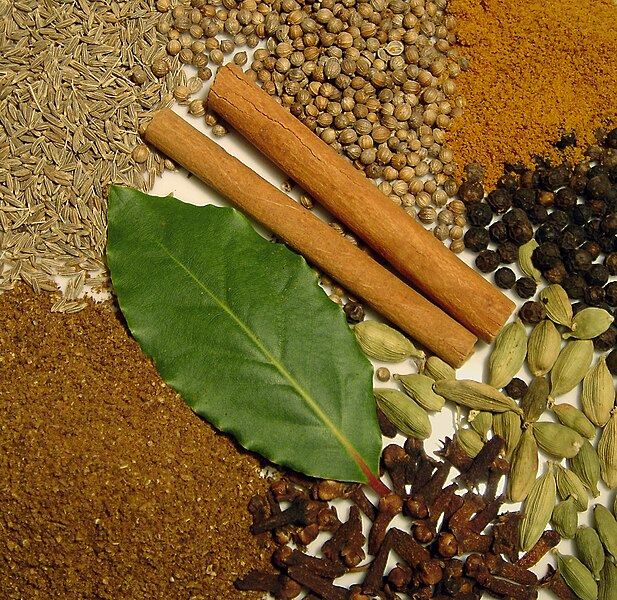
Garam Masala Ingredients

  • 2 tablespoons cardamom seeds
  • 2 tablespoons coriander seeds
  • 1 tablespoon cumin seeds
  • 1 tablespoon brown mustard seeds
  • 2 tablespoons black peppercorns
  • 20 cloves (about a teaspoon)
  • 1 dried arbol chile stemmed, seeded and crumbled
  • 1 (2 1/2-inch) cinnamon stick, broken in 1/2
  • 1 teaspoon freshly grated nutmeg


Combine all of the seeds, peppercorns, cloves, chile and cinnamon in an 8-inch cast iron skillet over medium-high heat. Heat, moving the pan constantly, until you smell the cumin toasting, approximately 3 to 4 minutes. Remove the mixture to a plate and spread out to cool for 5 minutes. Once cool, add the toasted mixture and nutmeg into a spice grinder. Process until a fine powder is formed, approximately 1 minute. Use immediately or store in an airtight container for up to 1 month. It looks like a lot of work - but it is worth it, especially if you just like doing things the hard way, as I do. For a more detailed discussion of this masala I recommend the Good Eats episode “The Curious Case of Curry.” That’s where I got the above recipe, which is used to make Lamb Tikka. It’s also where I learned how to make a basic Tandoor. Alton Brown is my culinary hero.

Here are a couple of links you may be interested in:
Interview with Suvir Saran
Indian Food Made Easy
- A good site for easy Indian recipes.

Sunday, November 28, 2010

Lone Star Rating System

Here is how our rating system works:
Any restaurant reviewed will receive 1-5 points of the Lone Star. The more points received, the more highly recommended a restaurant is. Here is how each of the points should be interpreted-

One Point: A very good place to eat. It's worth the visit.


Two Points: Excellent place to eat. You should try to make the time to visit this place.


Three Points: Outstanding place to eat. Every Austinite should try this place and any visitor should try to make time to get here.


Four Points: Superb place to eat. If you visit Austin and don't go to this restaurant you will regret it.


Five Points: Essential place to eat. So good that if you visit Austin and don't eat here not only will you regret it, but your whole trip will be ruined.